Android XR Is Becoming the Smart Glasses Platform to Watch
Android XR is no longer just a headset story. Xreal Aura shows how Google's spatial platform could move into lighter smart glasses.
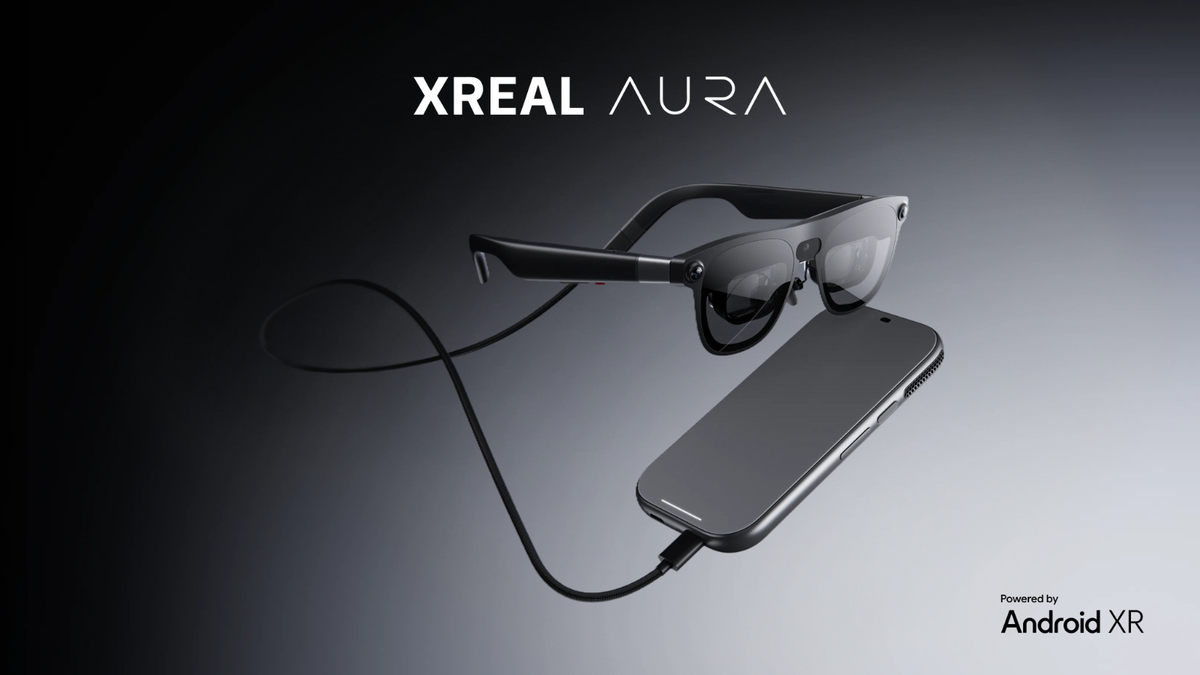
Android XR is starting to look less like a headset project and more like Google's smart glasses platform. That shift matters because glasses are where spatial computing becomes normal, if it ever does.
Xreal's Aura smart glasses are the latest signal. Android Central reports that Aura runs Android XR, uses Qualcomm's Snapdragon Reality Elite chip, weighs under 95 grams, and is headed for a fall launch with reservations open in the U.S., U.K., and Japan.
That makes Android XR more than the software behind a single headset. It is becoming a platform Google can stretch across headsets, glasses, and AI-first spatial devices.
Why Aura matters
Headsets are impressive, but they are not casual. They are devices people put on for a task, a game, a meeting, or a session. Smart glasses are different. They aim for lighter, more frequent use.
Aura reportedly offers a 70-degree field of view, six-degrees-of-freedom tracking, hand tracking, world-facing sensors, and access to Android XR apps. Those are not small ambitions. Xreal is trying to move beyond simple display glasses into something closer to a spatial computer.
The real news is not only the hardware. It is that Android XR gives Xreal a platform with Google services, app distribution, Gemini integration, and developer familiarity behind it.
Google needs partners
Google has tried face-worn computing before. Google Glass arrived too early, looked too conspicuous, and became a privacy punchline. Android XR gives Google a different path. Instead of making one product carry the entire category, Google can let hardware partners test different designs.
Samsung's Galaxy XR pushed Android XR into headsets. Xreal's Aura pushes it toward lighter glasses. Future products could land somewhere between them. That variety is useful because nobody knows the perfect shape of spatial computing yet.
Apple's Vision Pro is a vertically integrated bet. Meta is building across Quest and Ray-Ban glasses. Google's advantage is the Android playbook: build the platform and let partners fight over the hardware.
The app question is still open
Every XR platform needs a reason to be used after the first demo. Android XR can promise familiar services, Play Store distribution, and Gemini, but glasses need specific daily jobs.
Navigation, translation, sports viewing, music learning, work collaboration, media, and light gaming all make sense on paper. The question is which of those becomes habitual. A product can have many demos and still lack one daily reason to wear it.
That is where Android XR's phone and app ecosystem could matter. If developers can adapt existing Android experiences to spatial use without starting from zero, the platform has a better chance of filling gaps quickly.
AI is the glue
Smart glasses make more sense when they have an assistant that can see, hear, and understand context. That is why Android XR and Gemini belong in the same conversation. A pair of glasses that only displays floating screens is a niche monitor. A pair of glasses that can identify what you are looking at, translate signs, guide you through a task, and answer visual questions has a clearer reason to exist.
That does not make privacy concerns disappear. World-facing sensors on glasses will always need careful controls. But it explains why Google, Samsung, Qualcomm, Xreal, Meta, Snap, and Apple are all circling the same idea: AI is more useful when it is closer to the senses.
The bottom line
Android XR is becoming one of the most important platforms to watch because it gives Google a second chance at glasses without making Google carry every design decision alone.
Xreal Aura may or may not become the breakout product. But it shows the shape of the strategy: lighter hardware, Android apps, Gemini, and partner devices that can push spatial computing beyond the headset.