Drafted AI Floor Plans: Why This Home Design Startup Is Worth Watching
Drafted.ai is making AI floor plans feel approachable, but the real test is whether it can turn early home ideas into useful design conversations without overselling what AI can build.
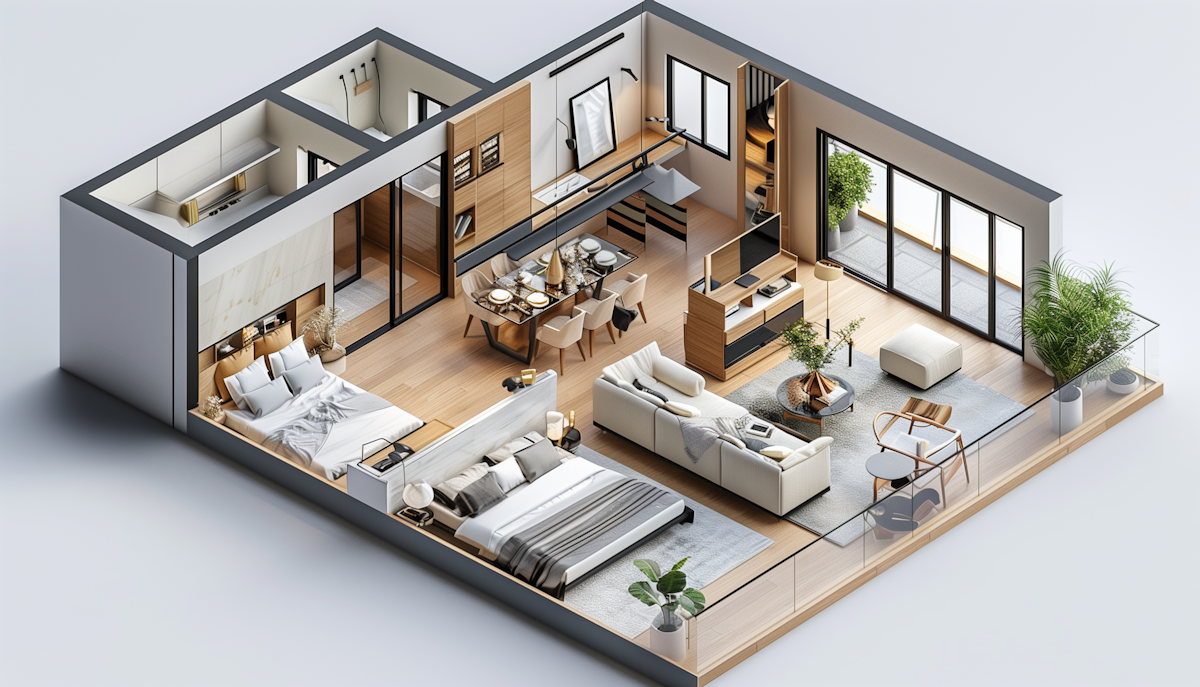
The most interesting thing about Drafted.ai is not that it can draw a floor plan. Plenty of software can sketch rooms. The harder question is whether AI can make the messy first stage of home design less intimidating for ordinary people without pretending that designing a real house is simple.
That is the useful way to look at Drafted.ai. The company describes its product as a free AI house plan generator with downloadable PDF and CAD files. Its Y Combinator profile says Drafted is part of YC's Spring 2026 batch, was founded in 2025, has a nine-person team in San Francisco, and has raised $17.5 million.
Those details make Drafted more than another weekend AI demo. It is a bet on a very specific frustration: people can imagine the home they want, collect references for years, and still struggle to turn that taste into a layout someone else can react to.
The problem Drafted is really solving
Early home design is full of vague language. A homeowner says they want "more light," "better flow," "a bigger kitchen," or "space for guests." An architect or designer then has to translate that into square footage, room adjacencies, circulation, structural choices, setbacks, budget, and local rules.
Most people are not ready for that conversation on day one. They have opinions, screenshots, and instincts, but not a plan. Drafted sits in that gap. It gives users a way to turn a rough idea into something visual: bedrooms, bathrooms, elevations, room placement, square footage, and style direction.
That sounds small until you imagine the actual use case. Someone considering an accessory dwelling unit can try a compact one-bedroom layout before calling a builder. A family planning a remodel can test whether moving an office near the front door ruins the living room. A person dreaming about a small house can see whether 1,200 square feet feels generous or cramped when the garage, storage, and laundry are included.
In that stage, the value is not a perfect plan. The value is a better conversation.
Why the product is easy to understand
AI products often ask users to believe in invisible capability. Drafted has an advantage: the output is visual. You can look at a generated house exterior or floor plan and immediately judge whether it is close to what you meant.
According to Drafted's YC launch material, more than 120,000 people used the site in a recent month and generated more than 325,000 home designs. Those are company-provided figures, not audited metrics. Still, they fit the product. Home design is naturally addictive when the cost of trying another version drops to almost nothing.
That is also where the hype risk starts. A floor plan can look convincing long before it is buildable. A nice layout on a screen does not answer whether the stairs work, whether the roofline makes sense, whether the plan fits local code, whether the structure is affordable, or whether the windows make sense for the climate.
Drafted should not be judged like a chatbot
The company says it is building multimodal generative models for residential architecture and spatial design. That matters because house plans are not just images. They are constraint systems.
A useful plan needs room relationships, privacy, daylight, storage, circulation, structural plausibility, site fit, and dozens of small decisions that affect daily life. A bedroom door facing the wrong way can make a plan feel cheap. A kitchen that looks open in a rendering can still be awkward if traffic cuts through the work area. A beautiful exterior can hide a bad layout.
So the real test for Drafted is not whether it can produce something that looks like architecture. The test is whether it can preserve constraints as users iterate. Can the tool remember that the office needs morning light? Can it keep plumbing sensible when the bathroom moves? Can it create alternatives without quietly breaking the plan?
If Drafted gets that right, it becomes more interesting than an AI image toy. It becomes a design exploration system.
Who Drafted is useful for now
The best audience is not someone ready to submit construction documents tomorrow. It is someone earlier in the process: homeowners, landowners, tiny-home shoppers, ADU planners, people comparing layouts, or anyone trying to explain a home idea to a professional.
For that user, a Drafted plan can be a thinking tool. It can reveal tradeoffs. A bigger primary suite may shrink storage. A second bathroom may make the hallway worse. A guest room may be better as a flexible office. A front-facing garage may dominate the elevation. Seeing those choices quickly is useful.
It may also help professionals, but only if the output fits their workflow. A builder or architect does not want a pretty image that has to be redrawn from scratch. They need files, dimensions, assumptions, and enough structure to speed up the next step. Drafted's promise of downloadable PDF and CAD files is important for exactly that reason, but the quality of those exports will matter more than the novelty of generating them.
For now, Drafted is best understood as an early concept tool, not a replacement for an architect. Its own site promotes free house plan generation and downloadable files, but pricing, limits, and export rules can change. Anyone using it for a real project should treat the output as a starting point for professional review, not as finished construction documentation.
The hard part is trust
A house is not a social post or a logo. Mistakes are expensive. The safest version of Drafted is honest about where it belongs: before final drawings, before permitting, before engineering, before construction.
That does not make the product less valuable. It makes the boundary clearer. AI can help people arrive at the professional conversation with better options and sharper questions. It can also help them discard bad ideas earlier, before they have paid someone to formalize them.
The danger is when a generated plan feels more authoritative than it is. Drafted will need to make the line between concept, export, and construction-ready documentation obvious. If users mistake early design output for a complete building plan, the product becomes risky in a way a normal design inspiration app is not.
Why Drafted is worth watching
Drafted is interesting because it takes AI out of the abstract productivity bucket and points it at a physical decision people actually care about. Homes are emotional, expensive, and hard to change. Anything that helps people explore better options earlier has a real use case.
The company also points to a broader shift. AI is moving from answering questions to shaping workflows where visual taste, constraints, and real-world consequences overlap. Residential design is a hard place to prove that, but it is also a meaningful one.
Drafted does not need to replace architects to matter. It needs to make the first mile of home design less blank, less expensive, and less dependent on a person already knowing how to speak the language of architecture.