Is Apple Intelligence Actually Useful in 2026?
Apple Intelligence is most useful when it disappears into normal iPhone and Mac tasks. The problem is that people expected a smarter Siri, not just quieter AI features.
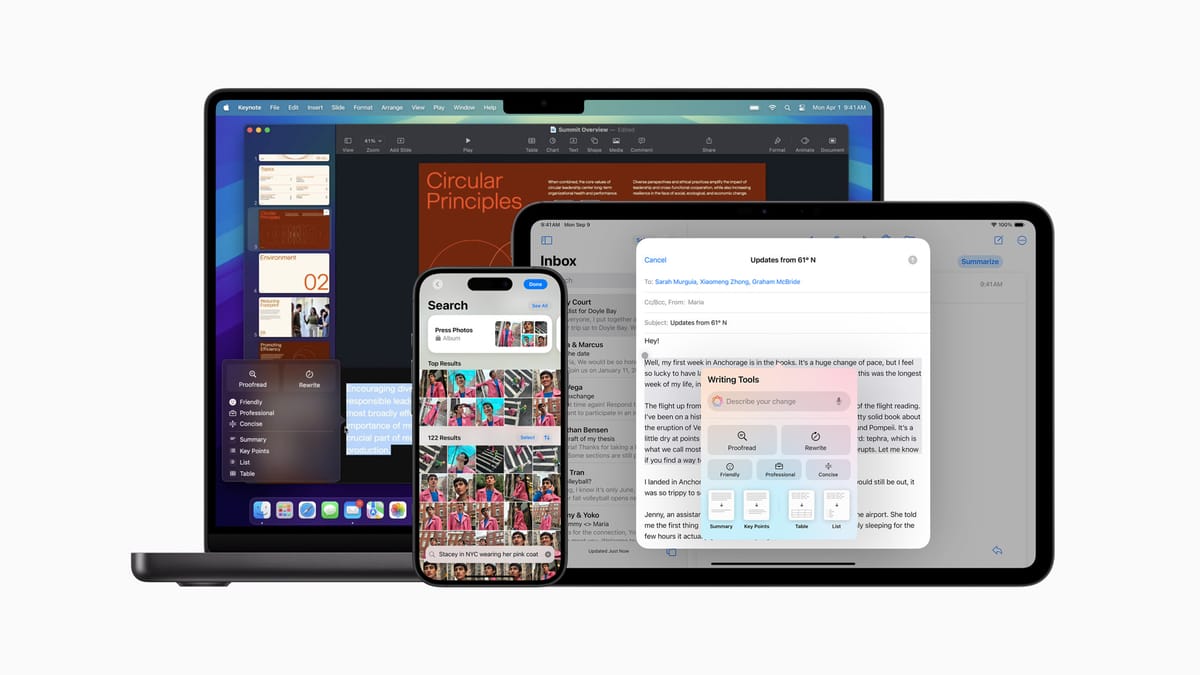
Apple Intelligence is useful in 2026, but not in the way many people expected. If you wanted Apple to ship a ChatGPT rival with an Apple logo, the product can feel underwhelming. If you wanted small AI features to show up inside the iPhone and Mac without turning your device into a chatbot, the story is more interesting.
That mismatch explains a lot of the frustration around Apple Intelligence. Apple sold a vision of personal AI woven into the operating system. Many users heard "Siri is finally fixed." Those are not the same promise.
Apple's feature updates have pushed Apple Intelligence into writing tools, visual intelligence, app actions, translation, notification handling, and ChatGPT handoff. Its iPhone privacy guide also emphasizes on-device processing and Private Cloud Compute for more complex requests. On paper, this is exactly the kind of AI Apple would build: integrated, privacy-framed, and less obviously chatty.
The real question is whether that makes everyday life better.
The useful parts are quiet
The best Apple Intelligence features are the ones that do not ask you to become an AI power user. Summarizing notifications, cleaning up writing, translating text, asking about something onscreen, removing friction from screenshots, or routing a request to ChatGPT when Apple's own systems are not enough: these are small features, but small features matter on a device people touch all day.
That is Apple Intelligence at its most believable. It is not a destination. It is a layer.
The problem is that layers are harder to market than chatbots. A useful summary of a messy notification stack does not feel like science fiction. A writing suggestion that saves thirty seconds does not feel like a revolution. But those are the places where AI can become normal without demanding attention.
Siri remains the emotional center of the problem
For many users, Apple Intelligence will be judged through Siri, fairly or not. If Siri still misunderstands a request, fails to complete a basic task, or needs to hand off to ChatGPT in a way that feels clunky, the entire Apple AI story feels weaker.
This is why Reddit threads about Apple Intelligence often sound more disappointed than the feature list suggests. Users are not only asking whether Writing Tools work. They are asking whether the assistant on their phone finally understands them.
Apple's challenge is that Siri is not just a feature. It is the symbol of whether Apple can make AI feel personal, local, and useful. Until Siri feels meaningfully better in daily use, Apple Intelligence will carry a trust deficit.
The ChatGPT handoff is useful, but awkward
Apple's integration with ChatGPT is one of the more practical parts of Apple Intelligence because it gives users an escape hatch. If Apple's own system cannot answer something, a more general model can help.
That is useful, especially for questions about documents, screenshots, images, or topics beyond Apple's model. But it also highlights the gap. When a user has to move from Apple Intelligence to ChatGPT, the experience can feel less like Apple solved AI and more like Apple built a polite doorway to someone else's AI.
That may be the right compromise. Apple does not need to own every model to make AI useful on its devices. But the handoff has to feel smooth enough that users do not think about where the intelligence came from.
Privacy is Apple's real differentiator
Apple's strongest argument is not that Apple Intelligence is the most powerful AI system. It is that Apple is trying to make AI fit inside a privacy model users already associate with its devices.
Apple's Apple Intelligence and Privacy disclosure describes transparency logging and Apple Intelligence Reports that can show how data is processed. Apple's Private Cloud Compute architecture is designed for requests that need more computation than the device can handle while extending privacy protections into the cloud.
For normal users, the technical details may not matter. The feeling does. Apple wants people to believe they can use AI on personal data without treating every prompt like a public post.
That is a meaningful position, especially as AI moves into messages, photos, mail, calendars, documents, and screen context. The more personal the use case, the more privacy stops being a side feature.
Where Apple Intelligence feels weak
Apple Intelligence still struggles when users expect it to behave like a full standalone AI assistant. It is not the best place for deep research. It is not the most flexible writing partner. It is not always the fastest path for complex brainstorming, coding help, or long document work.
That is why people who already pay for ChatGPT, Claude, Gemini, or Perplexity may find Apple Intelligence useful but not essential. It can improve the device experience without replacing the tools they already use for heavy AI work.
The most disappointed users are likely to be the ones who bought into the idea that Apple Intelligence would immediately make the iPhone feel like a new kind of computer. In practice, it is more incremental than that.
Why care?
Apple Intelligence is most useful for people who want AI to live inside normal computing tasks: writing a cleaner email, understanding a screenshot, summarizing interruptions, translating quickly, or getting help from Siri without opening another app.
It is less compelling for people who want maximum AI capability and are comfortable living inside dedicated AI apps. If your daily workflow already revolves around ChatGPT or Claude, Apple Intelligence is more of a convenience layer than a replacement.
That may sound like a criticism, but it is also Apple's best path. Most people do not want to manage models. They want their phone and laptop to become slightly less annoying.
The verdict
Apple Intelligence is useful in 2026 if you judge it as operating-system intelligence. It is less impressive if you judge it as a standalone AI product.
The feature set works best when it disappears into everyday tasks. The weakest point is still the expectation around Siri. Apple can ship clever writing tools and privacy architecture, but many users will not feel the upgrade until the assistant itself becomes more capable, more contextual, and less brittle.
Apple Intelligence is not useless. It is also not the finished future Apple implied. It is the beginning of AI becoming a normal part of personal devices, which means the most important question is not whether it dazzles. It is whether people keep using it after they stop trying to test it.
Sources
- Apple: New Apple Intelligence features are available today
- Apple Support: Apple Intelligence and privacy on iPhone
- Apple Legal: Apple Intelligence and Privacy
- Apple Security Research: Private Cloud Compute
- Reddit discussion: Is Apple Intelligence actually useful?
- Reddit discussion: Apple Intelligence usage on Mac