Camera AirPods Are the Clearest Sign Apple Thinks AI Needs Eyes
Apple reportedly wants to give AirPods cameras, not for photos, but to help AI understand the world around you.
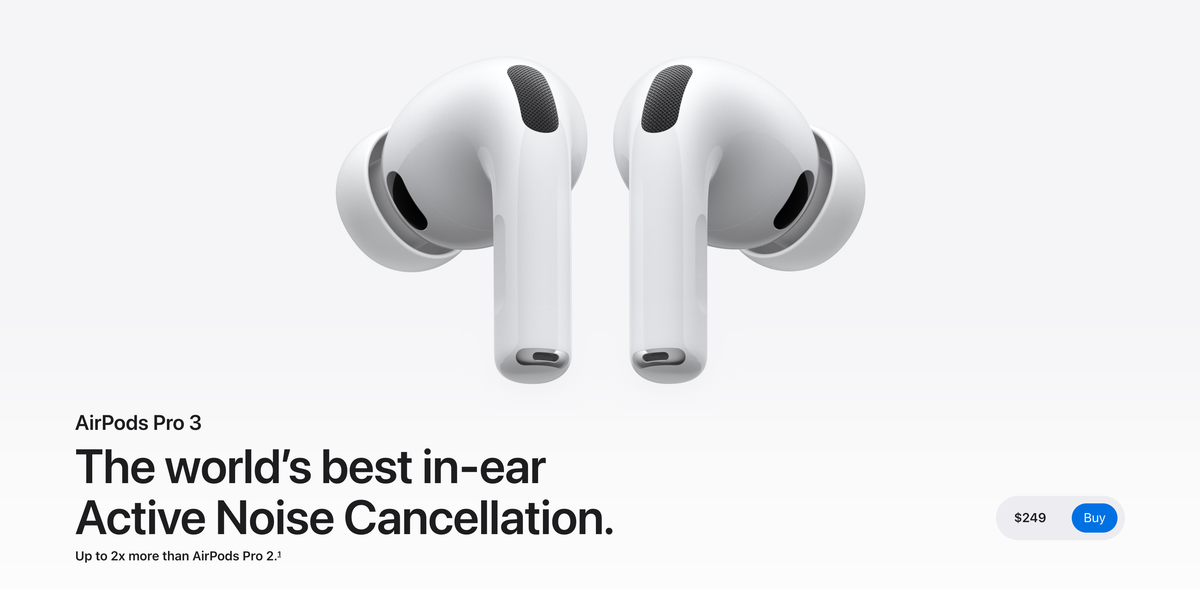
Apple reportedly wants to give AirPods cameras, but the interesting part is not photography. The point is not to turn earbuds into a tiny GoPro. The point is to give AI a better sense of what the wearer is looking at.
That distinction matters. A phone can already take photos. A Vision Pro can already understand parts of a room. What AirPods have is something different: they are small, familiar, worn often, and already connected to Siri. If Apple is really preparing AirPods with low-resolution cameras, as The Verge reported from Bloomberg's Mark Gurman, the product would be less about media capture and more about ambient context.
In other words, Apple may be asking a bigger question: what happens when an AI assistant can hear you and see enough of the world to understand what you mean?
Why put cameras in AirPods?
Camera-equipped AirPods sound strange because we usually think of cameras as tools for taking pictures. That is probably not the job here. Earlier reporting from The Verge described prototypes with cameras meant for AI features rather than traditional photo or video capture.
The idea is easier to understand if you imagine asking Siri a question while cooking, repairing something, shopping, or walking through a city. Instead of saying, "What is this?" and holding up a phone, the assistant could have limited visual context from what is already being worn.
That does not mean Apple should ship it. It does explain why the company might be interested. The next big leap for assistants is not only better answers. It is knowing what the user is referring to without making the user describe everything out loud.
AI assistants need context more than another chat box
Apple has spent years trying to make Siri more useful. The problem has not only been the model behind it. The problem is also input. A voice assistant that only hears a short command has to guess a lot. A chatbot that sits inside an app has to wait for the user to type, upload, paste, or describe the situation.
Cameras change that. Visual context can make a question less abstract. "How do I connect this cable?" is a better question if the assistant can see the port. "Is this ingredient still good?" is more useful if the assistant can identify what is on the counter. "Where do I turn?" is simpler if the assistant can see the street scene.
That is the same broad direction behind smart glasses, AI pins, and multimodal assistants. Apple may simply be looking for a device category that people already tolerate on their bodies.
AirPods are a safer step than smart glasses
Smart glasses are the obvious AI hardware dream. They are also culturally difficult. They sit on the face, point outward, and trigger privacy questions immediately. Google Glass never recovered from that social problem. Meta has had more success by making Ray-Ban glasses look normal, but camera glasses still require trust.
AirPods have a different starting point. People already wear them at work, on walks, in stores, and on public transit. They do not cover the face. They already contain microphones, sensors, batteries, and chips. Adding cameras would still be a major privacy shift, but the form factor is less alien than a new pair of full-time smart glasses.
That may be why Apple could use camera AirPods as a bridge. They would let Apple test AI visual context before asking millions of people to wear Apple smart glasses all day.
The privacy problem arrives immediately
The challenge is obvious: a camera worn near the face changes the meaning of AirPods. Even if the cameras are low-resolution and not designed for recording memories, people around the wearer will not necessarily know that. Apple would need visible indicators, clear controls, strict on-device processing where possible, and simple explanations of what the cameras do not do.
That is not just a communications issue. It is the product. If camera AirPods feel like a surveillance accessory, they will struggle no matter how clever the AI features are. If they feel like a private visual sensor for accessibility, translation, navigation, and everyday assistance, the pitch becomes more plausible.
This is really about Apple's AI hardware problem
Apple's current AI story is mostly attached to phones, Macs, and iPads. That gives Apple distribution, but it also keeps AI inside devices people already understand. Camera AirPods would push Apple into a more experimental category without requiring a brand-new product line.
The timing also matters. AI assistants are becoming more visual, more conversational, and more personal. If Apple waits until smart glasses are fully mature, it risks letting Meta, Google, Snap, and new AI hardware companies define what wearable AI feels like.
AirPods with cameras would not guarantee that Apple catches up. But they would give Apple a practical test bed for the part of AI that phones handle awkwardly: knowing what the user means in the physical world.
The bottom line
Camera AirPods sound odd until you stop thinking of them as cameras. They are better understood as eyes for Siri, or at least as a step toward an assistant that can understand context without forcing the user to hold up a phone.
That makes them one of the more interesting Apple rumors right now. Not because everyone needs cameras in their earbuds, but because the idea points to the real AI hardware question: where should an assistant live when it needs to understand the world around you?