Meta Signs AWS Graviton Deal to Power Its Next Wave of Agentic AI
Meta is deploying tens of millions of AWS Graviton cores, a signal that CPU-heavy agentic AI workloads are becoming a major infrastructure battleground.
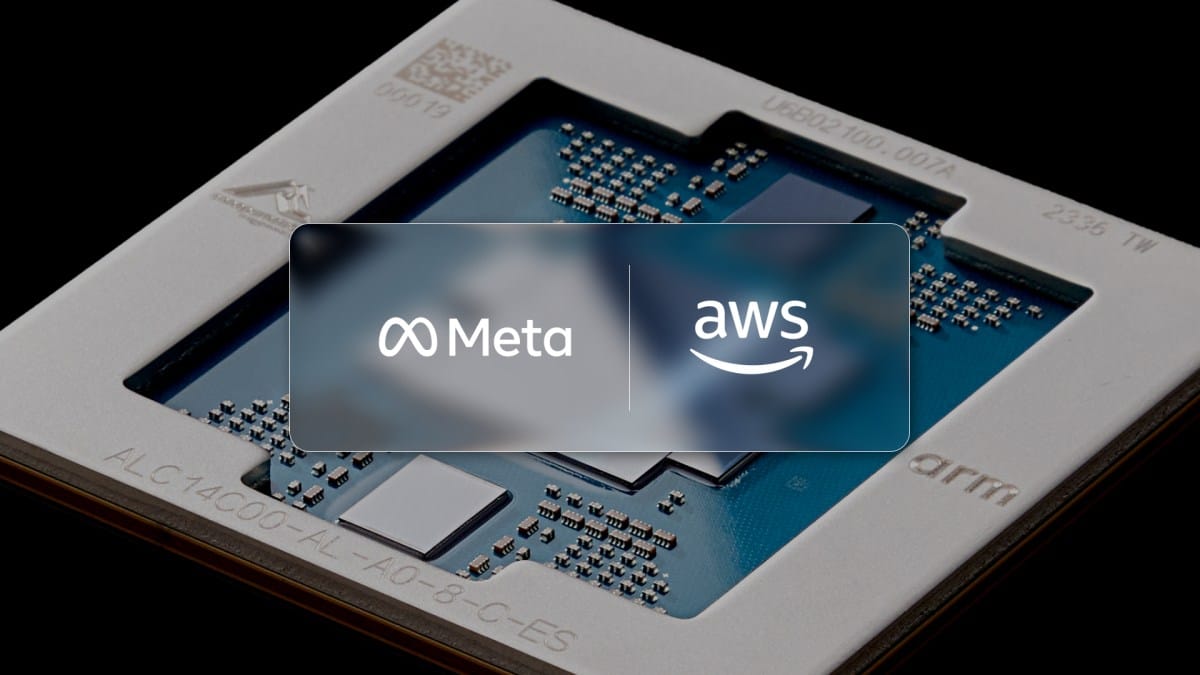
Meta is bringing tens of millions of AWS Graviton cores into its compute portfolio, a deal both companies are framing as a direct response to the rise of agentic AI. In announcements published on April 24, 2026, Meta and AWS said the partnership will expand a long-running relationship and make Meta one of the largest Graviton customers in the world.
The headline number matters, but the more interesting part is what it says about the AI infrastructure market. For the past two years, the AI conversation has revolved around GPUs. This deal is a reminder that CPUs are becoming a strategic bottleneck too, especially once companies move from model training into large-scale agent execution.
Why Meta wants Graviton now
Meta says the deal reflects a portfolio approach to infrastructure, where different workloads get different compute. According to the company, agentic AI systems create heavier demand for CPU-intensive work such as real-time reasoning, code generation, search, and coordinating multi-step tasks. That is the kind of load Meta believes AWS Graviton5 is well suited to handle.
Amazon is making the same pitch from the other side. In its own press release, the company says the initial deployment starts with tens of millions of cores and can expand as Meta's AI capabilities grow.
This is also a bet on purpose-built CPUs
AWS is using the agreement to underline the case for Graviton5 specifically. Amazon says the chip has 192 cores, a cache five times larger than the previous generation, and delivers up to 25 percent better performance while reducing inter-core communication delays by up to 33 percent. Those are the kinds of claims meant to position Graviton not just as cheaper cloud compute, but as infrastructure designed for AI-era scale.
Meta's framing is less about chip bragging rights and more about diversification. The company says no single chip architecture can efficiently serve every workload, which is a useful way of describing the current AI build-out. Training, inference, retrieval, orchestration, and agent execution do not all want the same hardware mix.
What this says about the next AI bottleneck
The clearest takeaway from this deal is that agentic AI is starting to reshape infrastructure planning. If AI systems increasingly need to reason in real time, execute multi-step actions, and coordinate across tools at scale, then CPU-heavy layers become more central than they looked during the first wave of foundation-model hype.
That does not make GPUs less important. It does mean the next round of competition is going to be about the full stack beneath AI products, from custom silicon and networking to how efficiently companies can spread workloads across many different kinds of compute.
Why the partnership matters beyond Meta
This is a Meta story, but it is also a wider market signal. If one of the world's biggest AI builders is adding Graviton at this scale for agentic workloads, other companies will read that as evidence that the AI infrastructure race is broadening fast. The question is no longer just who has the most accelerators. It is who can assemble the most balanced system for the kind of AI they want to ship next.